
Designing a shared kids’ room presents a wonderful opportunity to blend practicality with playful imagination. It’s a space where siblings grow, learn, and create memories together, often within the constraints of limited square footage. The key lies in ingenious design—making every inch count while ensuring each child feels celebrated and has their own sense of belonging. Far from being a mere challenge, a shared room can become a testament to clever planning and stylish execution.
Whether you’re accommodating two, three, or even more children, the goal is to create a harmonious environment that promotes both togetherness and individuality. We’ll explore 30 innovative ideas, transforming shared spaces into stylish sanctuaries where organization reigns supreme and personal flair shines through. Get ready to discover creative solutions that save space without ever sacrificing style.
Smart Sleeping Arrangements for Shared Spaces

The foundation of any shared kids’ room design begins with how sleeping areas are configured. These ideas prioritize comfort and efficiency.
- Classic Vertical Bunk Beds: A timeless solution, traditional bunk beds instantly free up floor space. Opt for sturdy wooden frames in natural tones or painted in cheerful pastels like mint green or soft blue for a serene yet playful vibe. Integrate under-bed drawers for extra linen storage.
- L-Shaped Bunk Beds: This configuration offers a more open feel, allowing for a small desk or seating area beneath the top bunk. Imagine a cozy reading nook with plush cushions in vibrant primary colors or a neutral palette with pops of sunshine yellow.
- Trundle Beds for Guests or Three: A bed with a pull-out mattress underneath is perfect for sleepovers or a third sibling. Choose a model with a clean, modern silhouette in white or light grey, making it adaptable to any decor style.
- Custom Built-In Bunks: Maximize every corner with bespoke bunk beds that seamlessly integrate storage, shelves, and even a small ladder. Picture a sleek design in a rich navy or deep forest green, framed by warm oak accents, creating a sophisticated yet fun atmosphere.
- Daybeds with Storage: For a more lounge-like feel, two daybeds can line opposite walls, each featuring large pull-out drawers. Dress them with patterned throws and an array of throw pillows in contrasting textures like velvet and linen.
- Wall-Mounted Fold-Down Beds: Ideal for truly tiny rooms, these beds disappear into the wall when not in use, revealing ample play space. Design the surrounding cabinetry in a light wood finish or a bright, cheerful color to keep the room feeling open.
- Platform Beds with Integrated Drawers: If bunks aren’t an option, elevated platform beds offer significant storage beneath. A minimalist design in a neutral hue like beige or light grey provides a calm foundation, easily personalized with bedding.
Maximizing Verticality and Wall Space
When floor space is at a premium, look up! Vertical solutions are game-changers for shared rooms.
- Loft Beds with Desks or Play Areas: Elevate one or both beds to create dedicated zones underneath for study, play, or cozy lounging. A sturdy metal frame in black or white offers an industrial-chic look, while wood can feel warmer.
- Tall, Narrow Bookcases: Utilize vertical wall space with slender bookcases that draw the eye upward. Paint them in a bold accent color like coral or sapphire blue to add a playful touch.
- Wall-Mounted Shelving Units: Floating shelves or modular shelf systems are perfect for displaying books, trophies, and small toys without cluttering the floor. Mix open shelving with closed cabinets for varied storage.
- Pegboard Walls for Adaptable Storage: Install a large pegboard to create a dynamic, customizable storage and display area. Hooks, small shelves, and baskets can be rearranged as needs evolve, perfect for art supplies or small collections.
- Vertical Toy Organizers: Fabric hanging organizers or clear wall pockets keep plush toys and small items tidy and accessible. Choose designs with fun patterns or bright colors to add visual interest.
- Built-In Wall Niches: If possible, create recessed shelves or cubbies within wall structures. This provides seamless storage that doesn’t protrude into the room, ideal for books or small decorative items.
Creative Storage Solutions for Every Item
Keeping a shared room tidy requires smart, accessible storage for toys, clothes, and school supplies.
- Under-Bed Storage Drawers: A classic for a reason, these drawers keep clutter out of sight. Opt for large, rolling bins or built-in drawers that match the bed frame for a cohesive look.
- Storage Ottomans and Benches: Dual-purpose furniture pieces provide seating and hidden storage. Choose upholstered options in durable, child-friendly fabrics like tweed or performance velvet in a muted tone.
- Built-In Wardrobes and Cabinets: Custom cabinetry can wrap around beds or span an entire wall, offering maximum storage without wasting space. A clean, handle-less design in white or light wood keeps the look streamlined.
- Modular Cubby Systems: Versatile and expandable, cubbies can be stacked or arranged to fit any space. Use colorful fabric bins to sort toys and add a pop of color.
- Labeled Bins and Baskets: Teach organization early with clearly labeled bins for different categories of toys. Woven baskets in natural fibers add texture and warmth.
- Desk with Integrated Storage: A compact desk that features drawers, shelves, or a hutch above provides a dedicated study zone and keeps school supplies organized.
- Corner Shelving Units: Don’t let corners go to waste. A corner unit can provide valuable display and storage space, softening the room’s edges.
Defining Personal Zones and Individual Expression
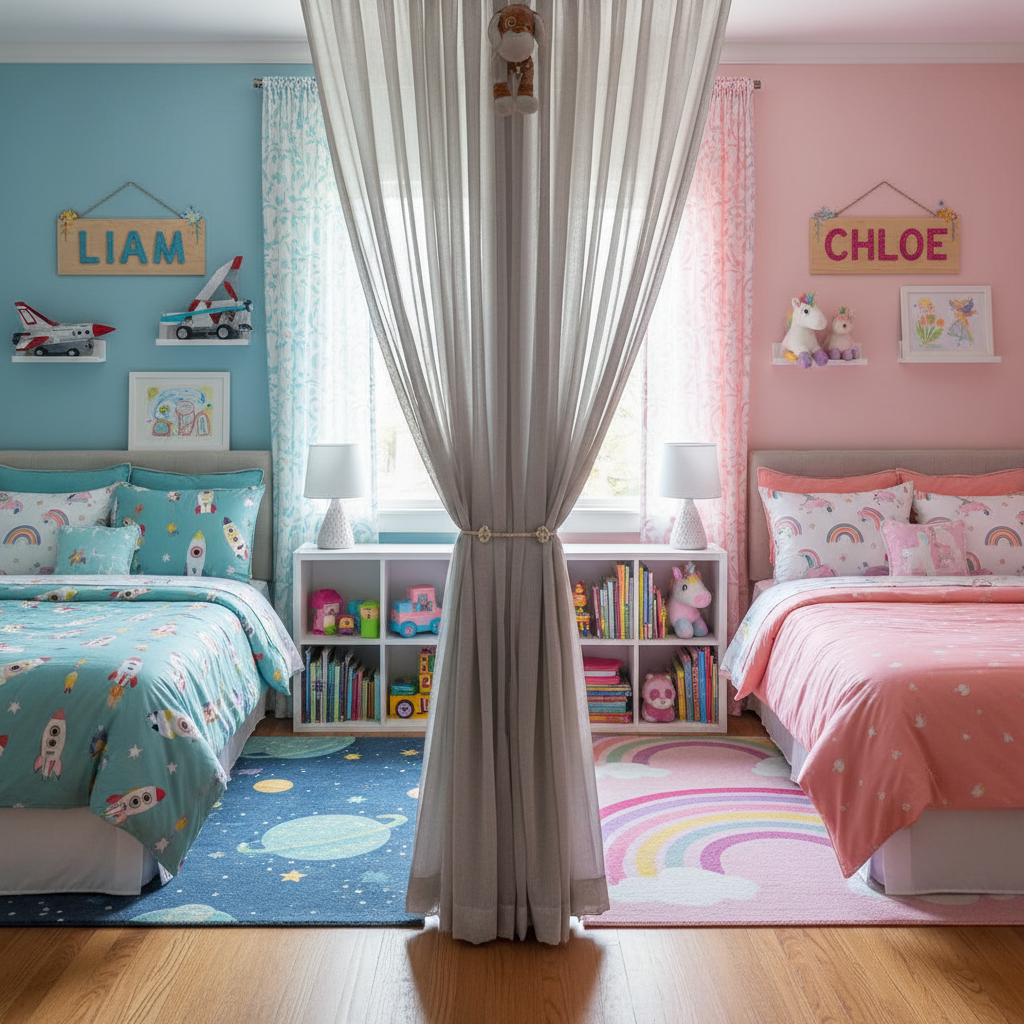
Even in a shared space, every child needs a sense of their own territory.
- Curtain or Fabric Room Dividers: A simple, flexible way to create privacy. Hang a ceiling-mounted curtain track and choose a lightweight fabric in a pattern or color that complements the room’s palette.
- Shelving Unit Dividers: A tall, open-back bookcase can physically separate areas while still allowing light to pass through. Fill it with books and decor unique to each child’s side.
- Color-Coded Zones: Use distinct bedding, rugs, or wall art in different color schemes to visually delineate each child’s space. For example, one side could feature soft blues and greens, the other warm yellows and oranges.
- Personalized Wall Art and Decor: Let each child choose their own wall decals, framed art, or photo display for their designated area. This celebrates their individuality within the shared space.
- Individual Reading Nooks or Canopies: Create a cozy, private escape for each child with a small canopy over their bed or a bean bag chair tucked into a corner. Soft lighting and comfortable cushions enhance the retreat.
- Dedicated Desks or Workstations: If space allows, provide two small, compact desks, perhaps on opposite walls or at either end of a long shared desk. Ensure each has its own lighting and storage.
Playful Decor and Flexible Furniture
Infuse personality and adaptability into the shared room with these charming ideas.
- Shared Theme with Individual Accents: Choose a broad theme like “adventure” or “nature,” then let each child personalize their side with specific elements. One might have a forest mural, the other a mountain range.
- Interactive Wall Decor: A chalkboard wall or a magnetic paint section provides endless creative opportunities and fun. Use a neutral base color for the wall, allowing the chalk art to be the vibrant focal point.
- Roll-Out Play Table: A low table on wheels can be pulled out for crafts or games, then easily tucked away under a bed or into a corner. Choose a sturdy, light-colored wood for durability and versatility.
- Bean Bags and Floor Cushions: These offer flexible seating for reading, playing, or lounging without taking up permanent space. Select durable covers in a mix of patterns and textures.
Conclusion
Creating a shared kids’ room that is both functional and beautiful is an art, but with these 30 design ideas, you’re well-equipped to craft a space that truly works. By thoughtfully integrating smart sleeping solutions, maximizing vertical space, implementing creative storage, and defining personal zones, you can build a harmonious sanctuary where siblings thrive. Embrace the opportunity to design a room that reflects each child’s unique personality while fostering a sense of togetherness. With a little creativity and strategic planning, your shared kids’ room will be a stylish, organized haven that inspires joy and comfort for years to come.