Transform Your Basement Bedroom on a Budget, No One Will Believe It’s DIY
Basements are often viewed as neglected, low-value spaces—dark, damp, and relegated to storage. However, for a homeowner looking to maximize living space and increase property value without the cost of an addition, transforming a basement room into a legitimate, beautiful bedroom is the ultimate budget hack. The key to this successful transformation is strategic DIY execution: tackling the core subterranean challenges (light, moisture, and temperature) using affordable, clever methods that yield professional, high-end results.
The goal isn’t just cosmetic; it’s to create an inviting retreat that fully sheds its basement identity, making guests and future buyers genuinely surprised to learn the room’s humble origins—let alone that you did the work yourself. Achieving a stunning, “no one will believe it’s DIY” look on a budget requires discipline, focusing capital on light, architecture, and texture.
Here is a comprehensive 1000+ word guide detailing the steps and materials needed for a high-impact, low-cost basement bedroom transformation.
I. The Non-Negotiable Foundation: Conquering Basement Flaws
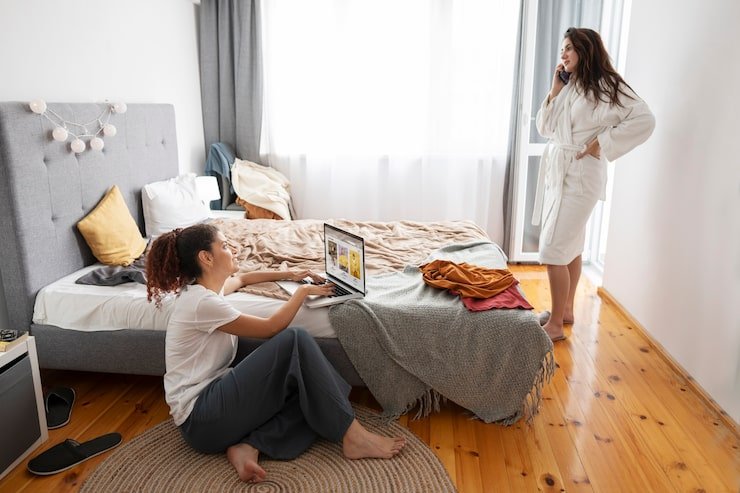
Before spending a dime on décor, you must address the core issues that make basements feel cold, musty, and low-value. These steps are essential for the longevity of your finishes and the comfort of the occupant.
1. Moisture and Air Quality Control

A professional-looking room cannot smell musty or feel damp.
- Dehumidification is Key: Purchase a high-capacity dehumidifier and run it constantly. If possible, choose a model with a direct drain hose to avoid the daily hassle of emptying the reservoir. Maintaining humidity between 30% and 50% is crucial for comfort and preventing mold/mildew behind walls and under flooring.
- Insulation & Warmth: Concrete walls naturally absorb and hold cold. If you have exposed or partially exposed walls, they must be addressed. For a professional, energy-efficient approach, install rigid foam insulation boards (XPS or polyisocyanurate) directly onto the concrete, then cover with drywall. This simple barrier adds immediate warmth and acts as a necessary thermal break, making the room feel instantly cozier than a typical basement.
2. Egress and Safety (Prioritize Code)

If the room is intended to be a legal bedroom, it must have an egress window (a window large enough and accessible enough for emergency exit).
- Budgeting for Safety: Installing or enlarging an egress window is often the highest single cost of a basement bedroom project, but it is mandatory for legal compliance, insurance purposes, and, most importantly, adding official value to the home as a legitimate bedroom. Do not cut corners here—it is the one area where professional help is usually required.
II. Lighting Strategy: Faking the Sun
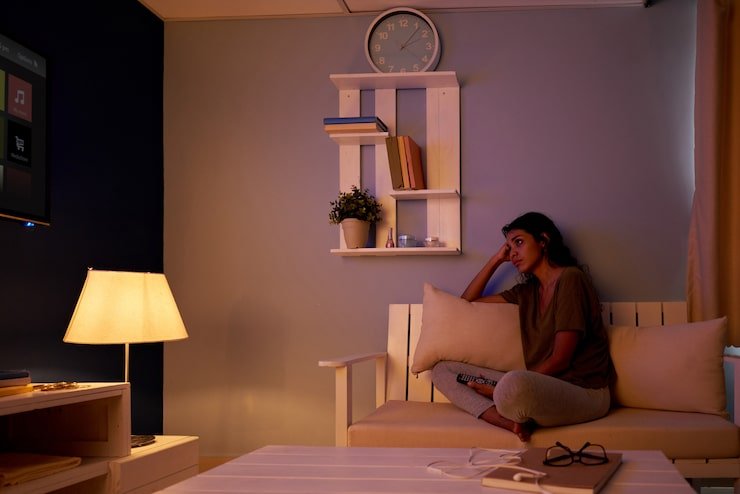
The biggest challenge is the lack of natural light. Your lighting plan must be strategic, layered, and powerful enough to mimic bright, airy daylight.
1. The Recessed Lighting Revelation (Highest DIY Impact)

The cheapest and fastest way to elevate a basement ceiling is with recessed LED lighting (can lights).
- Low-Cost, High-Impact: Modern LED recessed lights are incredibly shallow (some only require 2 inches of ceiling clearance) and easy for a DIYer to install, often simply replacing existing junction boxes or surface-mounted fixtures.
- Strategic Temperature: Use a clean, bright 4000K (cool/natural white) color temperature for the main overhead lighting. This mimics daylight best and combats the yellowing effect of older basements, making the entire room look cleaner and brighter.
- Dimmers: Install dimmer switches. This simple addition instantly elevates the room, allowing occupants to transition from bright “daylight” to soft, cozy ambient lighting at night—a crucial factor for making a bedroom feel luxurious.
2. Layered Warmth
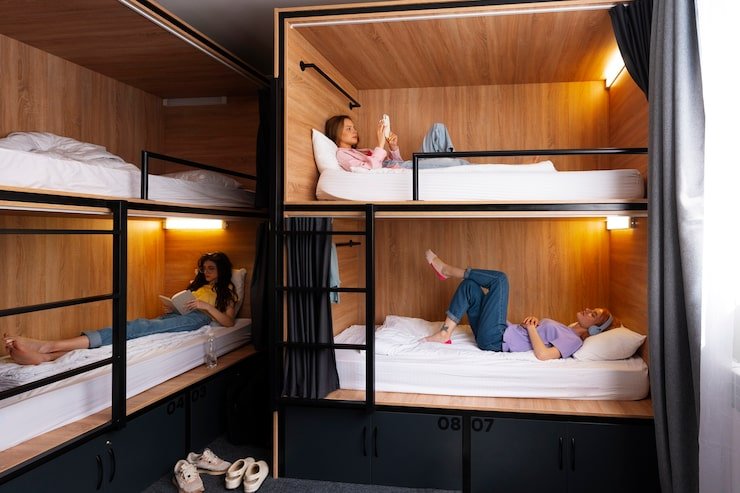
Relying solely on overhead light will make the room feel flat and institutional. You need layers:
- Wall Sconces: Use budget-friendly plug-in wall sconces (no need to run new electrical wires) near the bed or desk.
- Table and Floor Lamps: Use lamps with 3000K (soft white/warm) bulbs. Placing them in corners adds depth and draws attention away from the ceiling, making the space feel cozier and more defined.
III. Architectural Tricks That Scream “Custom”
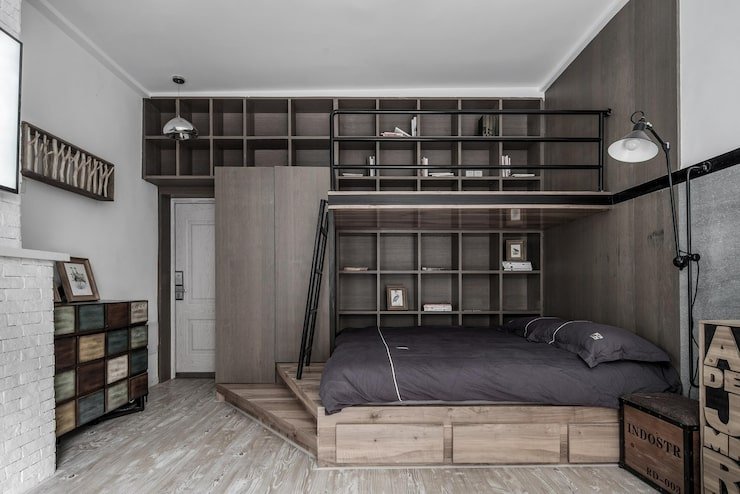
The goal is to add architectural detail that suggests the room was custom-built, not tacked onto a concrete space.
1. The Crown Molding Illusion
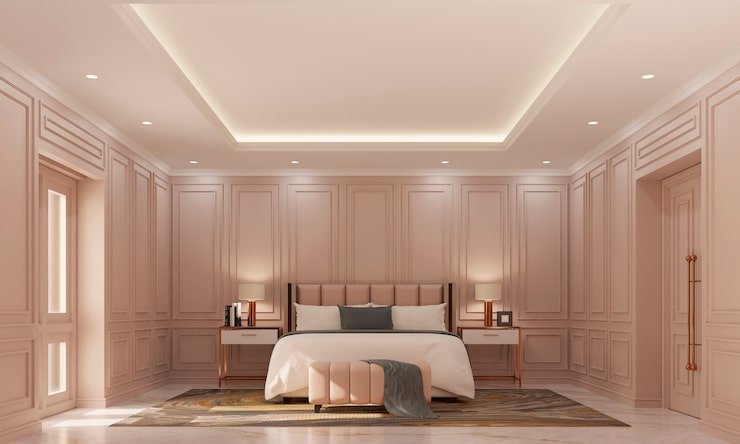
Basements often have low ceilings. Adding crown molding might seem counterintuitive, but if done correctly, it actually helps.
- Use Thin Trim: Opt for small, thin composite or foam crown molding. It’s inexpensive, lightweight, and easy to cut and install with basic adhesive or a nail gun.
- Paint It Away: Paint the molding the exact same color as the ceiling and the wall. By blurring the line between the wall and ceiling, the eye is fooled into seeing the room as one continuous space, visually raising the ceiling height—a trick used by professional designers in small or low-ceilinged rooms.
2. DIY Board-and-Batten or Wainscoting
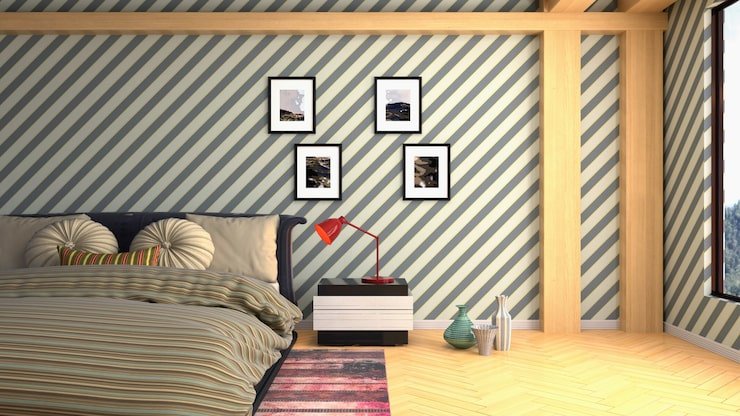
This simple trim technique adds texture and depth, making plain walls look expensive.
- Materials: Use inexpensive, thin MDF (Medium-Density Fiberboard) strips or thin lumber (1x2s) to create a simple board-and-batten or wainscoting pattern on the lower half of the walls.
- The Finish: Caulk every seam and joint meticulously. This step is what separates amateur DIY from professional work. Paint the entire wall section (the battens and the wall in between) the same crisp, clean white as the trim. This contrast against a light gray or beige upper wall color creates a huge visual impact for minimal material cost.
3. High Curtain Placement
Even if the basement window is small, you can fake large windows:
- Hang High and Wide: Install curtain rods significantly wider than the window frame and place them as close to the ceiling as possible.
- Use Sheer Fabric: Use long, flowing light linen or sheer curtains that fall all the way to the floor. When the curtains are drawn open, the excess fabric on the sides covers the boring wall, and the high placement draws the eye upward, maximizing perceived ceiling height and window size.
IV. Flooring and Furniture: Comfort and Scale
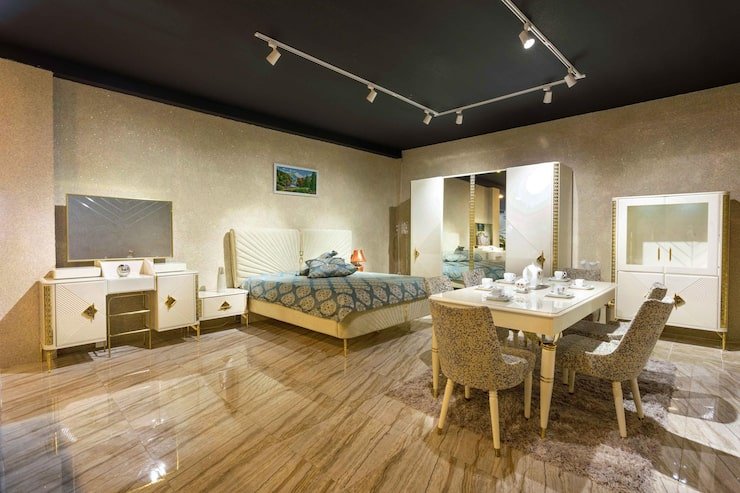
Basement floors must be warm, durable, and completely waterproof.
1. The LVP MVP (Most Valuable Product)
Forget carpet (which molds and holds moisture) or cold painted concrete.
- Luxury Vinyl Plank (LVP): LVP is the ultimate basement flooring material. It is 100% waterproof, warm to the touch, and designed to float above concrete, minimizing moisture issues. Choose a click-and-lock plank in a warm, wide-plank wood finish (like light oak or maple) for easy DIY installation and a high-end, modern look.
2. Focus on Vertical Furnishings
Choose furniture that emphasizes height to combat low ceilings:
- Tall Headboard: Use a tall, upholstered headboard. This serves as a strong vertical anchor and adds texture and softness that concrete basements desperately need. You can DIY this by covering a large piece of plywood with batting and fabric.
- Vertical Storage: Use narrow, floor-to-ceiling shelving units rather than wide, short pieces. Paint the shelves the same color as the walls to help them blend in, maximizing storage while minimizing visual clutter. Clutter instantly makes a DIY job look cheap.
V. The Final Touches (The “Unbelievable” Factor)
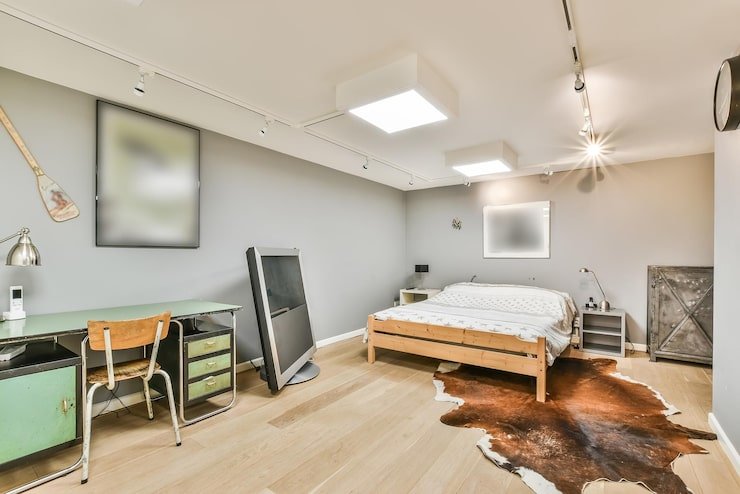
The professional look is all in the details:
- Hardware and Switches: Replace old, yellowed plastic light switches and outlet covers with new, crisp white or subtly decorative metal versions. This small swap instantly cleans up the perimeter of the room.
- Bedding: Invest in high-quality white bedding. White duvets, sheets, and pillow shams are universally associated with clean, luxurious hotel rooms, offering the highest return on aesthetic investment.
- Art and Mirrors: Use oversized artwork (even affordable printed canvases) and large mirrors. Oversized items make a space feel more expansive and intentional, masking the basement’s typically small dimensions.
By strategically focusing your budget on layered lighting, architectural trim details, and the champion material, LVP, you can successfully transform a dark, unappealing basement room into a legitimate, high-value bedroom retreat that truly earns its professional facade.