
Metal roofing has become increasingly popular across residential and commercial properties, heralded as the long-term, low-maintenance solution to traditional asphalt shingles. Its touted advantages—a lifespan of 40-70 years, superior fire resistance, and energy efficiency—are often the focus of marketing materials.
However, behind the shiny veneer and impressive warranties lie several hidden disadvantages and practical challenges that potential homeowners and builders must thoroughly understand before making this significant investment. Ignoring these drawbacks can lead to unexpected costs, noise issues, complex repairs, and buyer’s remorse.
I. The Acoustic Challenge: Noise Amplification
Perhaps the most immediately noticeable disadvantage of metal roofing, especially in residential settings, is noise amplification.
The Sound of Weather
Metal is highly resonant. Unlike heavy asphalt or tile, which absorb sound, a thin metal roof panel acts like a drum skin, especially when subjected to severe weather:
- Rain and Hail: A heavy rainstorm or hail event can create a surprisingly loud, persistent drumming sound inside the home. This noise can be particularly disruptive in bedrooms or home offices, turning a cozy evening into a loud, jarring experience.
- Expansion and Contraction (The “Pinging”): Metal naturally expands and contracts rapidly with temperature changes (e.g., a hot day followed by a cold night). This thermal movement causes the panels to rub slightly against fasteners and the substrate, resulting in frequent clicking, popping, and “pinging” sounds. While sometimes minimal, these noises can be alarming and irritating, especially during quiet early mornings or evenings.
Mitigation Requires Extra Cost
To address the noise issue, homeowners must invest in significant extra steps during installation, which drives up the initial cost:
- Solid Sheathing and Decking: Metal roofs must be installed over a solid layer of plywood or oriented strand board (OSB), not just open rafters, which adds material cost.
- Acoustic Underlayment: Specialized, heavy-duty underlayment or sound-dampening insulation must be placed between the metal panels and the roof deck to absorb impact noise. This is an essential but costly add-on.
II. Installation Complexity and High Initial Cost
The price tag of a metal roof often comes as a shock, and this cost is inextricably linked to the required expertise for proper installation.
Specialized Labor and High Cost
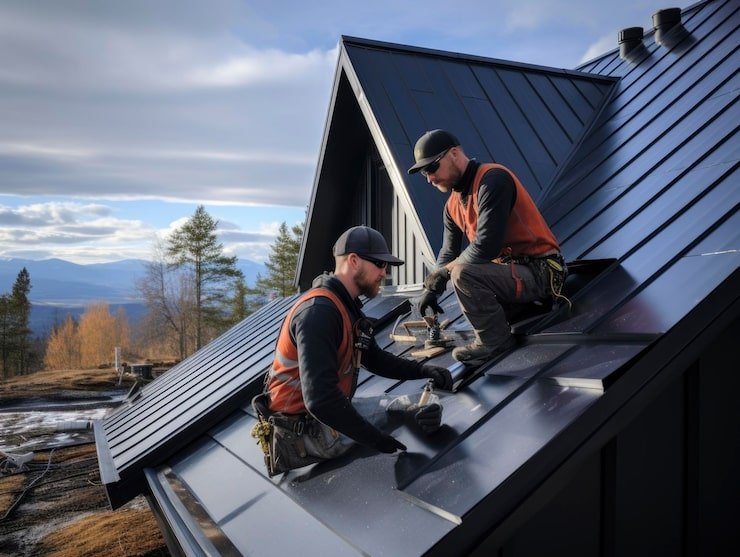
Metal roofing is not a DIY project and requires highly skilled, certified installers—a specialized workforce that commands higher labor rates.
- Precision is Paramount: Metal panels must be perfectly aligned, fastened, and sealed. Improper installation, even a slight misalignment, can void the warranty, lead to leaks, or cause premature corrosion, issues that may not become apparent for several years.
- Detailed Flashing and Seaming: Areas around chimneys, vents, and valleys require complex, custom-bent metal flashing. If these seams are not expertly sealed and fastened, they become the primary failure points for water intrusion. The complexity of these details drives up labor time and cost significantly.
Cost vs. Lifespan Payback
While a metal roof may have a higher ROI over 50 years, the initial outlay is typically two to three times higher than a standard architectural asphalt shingle roof. This high upfront investment can be prohibitive for many homeowners and may not be fully recouped if the home is sold within the first 10-15 years.
III. The Problem of Oil-Canning and Aesthetics
While metal offers a clean, modern look, it is susceptible to a visual phenomenon known as “oil-canning.”
What is Oil-Canning?
Oil-canning refers to the visible waviness or buckling—a subtle distortion—in the flat areas of a metal roof panel. It is primarily an aesthetic issue, not a structural one, but it can severely detract from the roof’s clean look.
- Causes: It’s often caused by manufacturing stresses, excessive thermal expansion/contraction, or slight variations in the sub-structure. Even expert installation cannot completely prevent it.
- Buyer Perception: Because oil-canning is purely aesthetic and cannot be “fixed,” it can become a negative talking point for potential buyers during a home appraisal or inspection, making the roof appear imperfect or cheaply installed, despite the high cost.
Susceptibility to Dents
Unlike flexible asphalt, a metal roof, particularly thinner gauge aluminum or steel, is vulnerable to denting from large hail, falling branches, or improper foot traffic.
- Irreversible Damage: Dents are often permanent and highly visible, especially in glossy finishes or on low-slope roofs.
- Maintenance Challenge: Technicians and homeowners must walk very carefully on the roof, if at all, to avoid leaving permanent indentations.
IV. Corrosion and Finish Degradation
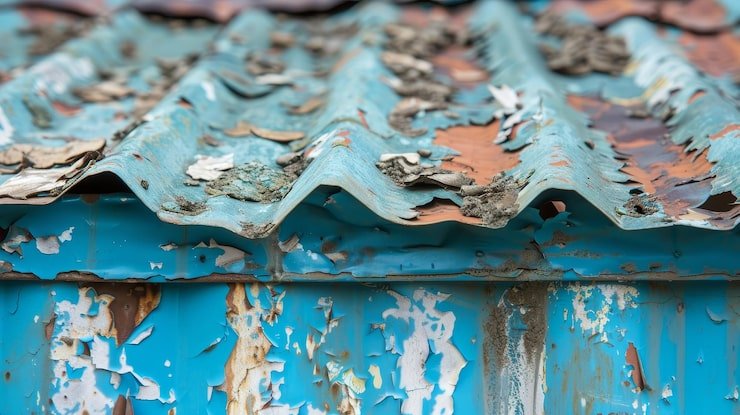
Despite claims of rust resistance, metal roofs are not immune to environmental degradation, especially depending on the material and coating.
Galvanic Corrosion
When two dissimilar metals come into contact (e.g., an aluminum panel fastened with a copper nail or a steel panel touching galvanized metal flashing), an electrochemical reaction (galvanic corrosion) occurs. This reaction rapidly deteriorates the weaker metal.
- Hidden Danger: Installers must meticulously ensure that all fasteners, flashings, and contact points are made of the same or compatible metals. A mistake in this area can lead to premature failure and costly leaks years down the road.
Fading and Chalking
The longevity of a metal roof’s color depends heavily on its protective coating, often a Kynar 500® or HDP (High-Definition Polyester) finish. While these are durable, they are not eternal.
- Fading Over Time: Exposure to intense UV light, particularly in southern climates, can cause the color to fade or become “chalky” (a dull, powdery appearance) over time. While the roof structure remains sound, the aesthetic quality degrades, requiring repainting—an additional, often overlooked cost.
- Warranty Caveats: Warranties often cover structural integrity for 50 years but may only cover paint fading for 20-30 years, and typically exclude damage from pollutants or coastal salt spray.
V. Complex Repair and Insurance Issues
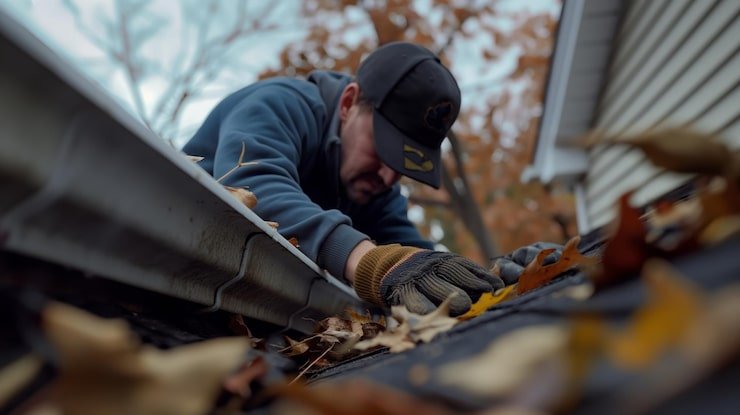
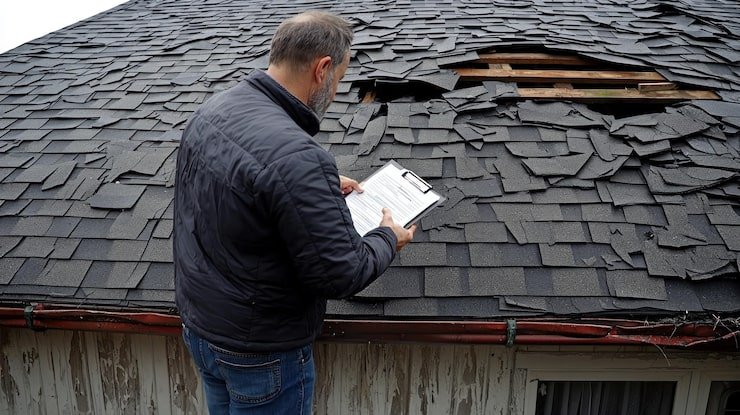
When damage does occur, fixing a metal roof is often more complicated and expensive than repairing a traditional roof.
Panel Replacement Challenges
If a single section or panel is damaged by a tree limb or a severe localized hailstorm:
- Difficulty Matching: It is often extremely difficult to perfectly match the color and profile of an aged metal panel due to fading, even if using paint from the original batch. A patched area can stand out visually.
- Seam Disruption: Unlike shingles, where a single piece can be pulled out, metal panels are typically interlocked or feature complex seams. Repairing one section often requires removing and reinstalling multiple adjacent panels, significantly increasing labor time and the risk of seam failure.
Insurance and Claims
While generally durable, some insurance companies may view metal roofing as a specialty product.
- Hail Claims: Depending on the policy and the severity of the denting (purely aesthetic damage), some insurers may be reluctant to approve full replacement claims for metal roofs damaged by hail, arguing the structural integrity remains intact. This can leave the homeowner with a visually marred, high-cost roof.
Summary of Hidden Disadvantages
| Hidden Disadvantage | Practical Impact on Homeowner | Cost Implication |
| Noise Amplification | Loud drumming during rain; popping/clicking from thermal movement. | Requires costly sound-dampening underlayment and decking. |
| High Initial Cost | 2-3 times the cost of asphalt shingles. | Extended payback period; high upfront capital. |
| Oil-Canning | Visible waviness/buckling on flat panels. | Aesthetic defect that reduces perceived value (unfixable). |
| Complex Installation | Requires highly specialized and expensive labor. | High labor costs; high risk of leaks if installation is flawed. |
| Corrosion Risk | Potential for premature failure due to incompatible metals. | Costly repair/replacement if galvanic reaction occurs. |
| Fading/Chalking | Aesthetic degradation over 20-30 years. | Requires future repainting (added maintenance cost). |
While metal roofing offers tremendous value over its lifetime, understanding these hidden disadvantages is essential for realistic budgeting and expectation management. The factors of noise, high installation complexity, and potential aesthetic compromises often mean the cost calculation involves more than just the price per square foot.